Reading List
Book Library
119 essential books across 12 categories — each with a summary, core frameworks, and the one key lesson that changes how you create and market content.
119
Books
12
Categories
381+
Frameworks extracted

One Million Followers
Social Media & Growth A data-driven blueprint for building a massive social following in 30 days. Kane reverse-engineers virality by testing content at scale — running hundreds of ad variations to discover what truly resonates before committing to organic distribution.
Core Frameworks
01
Test and learn at scale: Publish many variations, spend a little to test them, keep the winners and scale them.
02
Borrow audiences through collaboration: Grow faster by working with people who already have the audience you want.
03
Content people want to share: Before you post, ask why someone would share it.
The secret to one million followers is not talent or luck — it's the willingness to test at a volume most people find uncomfortable.

Jab, Jab, Jab, Right Hook
Social Media & Growth The social media playbook for giving before you ask. Three pieces of pure value (jabs) earn you the right to make one ask (right hook). Most brands skip the jabs entirely and wonder why nobody responds to their offers.
Core Frameworks
01
Jabs and the right hook: Give value again and again (jabs) before you ask for anything (the right hook).
02
Native content: Each platform has its own language and culture; content must be made for the platform, not pasted across.
03
Content is king, context is God: Great content fails in the wrong context; the platform, moment and audience decide whether it lands.
The best marketing strategy ever: care. Give value first. Ask second. Most brands have this completely backwards.

The End of Marketing
Social Media & Growth Traditional marketing is dead — now brands must humanize or die. Gil argues the era of faceless corporate content is over and the brands that win are the ones that show up as people, not logos. A field guide for becoming a creator-brand hybrid.
Core Frameworks
01
Humanize your brand: People trust people more than logos; brands must show the humans behind them.
02
Trusted human voices: Employees, influencers and customers carry a brand's message further and more credibly than ads.
03
From broadcast to conversation: Organic reach is shrinking; brands win through communities and direct conversations.
Marketing is dead. Long live the human connection. The brands that act like people will inherit the attention economy.

Likeable Social Media
Social Media & Growth A practical system for building a social media presence that people actually want to follow. Kerpen's core insight: listen first, respond always, and give away more value than you think is reasonable.
Core Frameworks
01
Listen first, and never stop listening: Before talking, find out what your customers say, need and complain about.
02
Respond to everyone — including the negative: Reply quickly to every comment, and answer criticism in public instead of deleting it.
03
Be authentic, honest and transparent: Talk like a person, tell the truth, and admit mistakes.
The best social media strategy is also the simplest: listen more than you talk, and respond to everyone who reaches out.

Social Selling Mastery
Social Media & Growth The definitive guide to using social media for B2B sales. Hughes replaces cold calling with warm social relationships built before the pitch is ever made. Social listening, content sharing, and relationship nurturing become the sales funnel.
Core Frameworks
01
Social selling is not social media marketing: Marketing speaks one-to-many; social selling is one-to-one with the buyer.
02
The salesperson's social selling path: Personal brand, buyer-centred profile, buying committee, content, daily routine.
03
Scaling it across the company: Mindset shift, sales professionals, a content lead factory, then sales operations to scale.
Cold calling is dead. Social selling is meeting buyers where they already are and providing value before ever making an ask.

Crushing It!
Social Media & Growth The playbook for building a personal brand on every social platform simultaneously. Vaynerchuk maps out platform-specific strategies and argues the opportunity to build a personal brand has never been larger or more accessible.
Core Frameworks
01
The seven essentials: Intent, authenticity, passion, patience, speed, work and attention — the traits behind people who build a personal brand.
02
Document, don't create: Instead of inventing content, share what you're actually doing and learning.
03
Pick your platforms: The book walks through each platform's strengths; choose the ones that fit your talent and audience, then go deep.
Your personal brand is your legacy. Start building it today on every platform available to you — the cost of entry has never been lower.

Hook Point
Social Media & Growth The entire marketing game is won or lost in the first three seconds. Kane's Hook Point framework identifies why some content immediately captures attention while identical content is ignored — and how to systematically engineer irresistible opening moments.
Core Frameworks
01
The hook point in a 3-second world: You have about three seconds; a hook point is what makes the right people stop and react.
02
Hook vs. clickbait: A hook sets a clear expectation and delivers on it; clickbait sets one and doesn't.
03
Start from the audience, judge by results: Build hooks from what your target audience responds to, and measure them by business results, not views.
In the attention economy, you don't have a marketing problem — you have a hook problem. Master the first 3 seconds and everything else becomes possible.

YouTube Secrets
Social Media & Growth The definitive creator's guide to building a successful YouTube channel. Cannell covers everything from channel positioning and video optimization to monetization strategies, treating every video as a long-term business asset.
Core Frameworks
01
Content, then community, then revenue: Create valuable videos, build a community around them, and revenue follows the influence.
02
Measure value: the four metrics: Click-through rate, average view duration, average percentage viewed, average views per viewer.
03
Revenue streams: Ad revenue, product promotions, merchandise and crowdfunding — chosen to fit the audience.
Every video you publish is an asset. Treat it like a business investment, not a social media post, and your channel becomes a compounding machine.

The YouTube Formula
Social Media & Growth The most algorithm-literate YouTube growth book available. Eves reveals how YouTube's recommendation system actually works and builds a systematic approach to creating content that the algorithm pushes to new viewers consistently.
Core Frameworks
01
The algorithm follows the audience: YouTube recommends what viewers watch and enjoy; serve viewers and the algorithm follows.
02
Click and watch: Read click-through rate and watch time together to know what to fix.
03
Know your viewer: Research who watches, what else they watch and why, before deciding what to make.
The algorithm is not your enemy — it is a mirror. It shows you exactly what your audience loves. Stop fighting it and start using that feedback loop.

Platform Revolution
Social Media & Growth The definitive guide to how platform businesses work. Understanding platform economics is essential for creators and marketers — it explains why algorithms behave the way they do and how to align your content strategy with platform incentives.
Core Frameworks
01
Pipelines vs. platforms: Pipelines create value step by step and push it to customers; platforms enable interactions between producers and consumers.
02
Network effects: Same-side and cross-side effects, positive and negative.
03
The core interaction: Participants, value unit and filter: the interaction a platform is built to enable.
Every social platform is a two-sided market. The creator who provides enough value to pull consumers onto the platform gains disproportionate algorithmic favor.

The Attention Economy
Social Media & Growth The most rigorous empirical study of how attention actually works in digital advertising. Nelson-Field's research reveals that most engagement metrics are meaningless for brand building, and that genuine attention is scarce and measurable.
Core Frameworks
01
Active, passive and non-attention: An ad can be looked at, only partly noticed, or not noticed at all.
02
Viewable is not viewed: An ad that meets viewability standards may still get no attention.
03
Attention depends on the platform and format: How much attention an ad gets varies with screen coverage, format and platform design.
Most digital content receives passive glances, not genuine attention. The creators who win design specifically for active, lean-in engagement.

Contagious
Social Media & Growth The science of why things go viral. Berger's STEPPS framework identifies six principles that make content, products, and ideas spread through social networks — based on rigorous academic research translated into immediately applicable tactics.
Core Frameworks
01
STEPPS: Six principles that make things spread: Social Currency, Triggers, Emotion, Public, Practical Value, Stories.
02
Social Currency: We share what makes us look good. Three levers: inner remarkability, game mechanics, making people feel like insiders.
03
Emotion: high vs. low arousal: High-arousal emotions (awe, excitement, amusement, anger, anxiety) drive sharing; low-arousal ones (sadness, contentment) suppress it.
Virality is not random — it follows predictable patterns. Engineer those patterns into your content and sharing becomes systematic, not accidental.

Trust Me, I'm Lying
Social Media & Growth A confessional expose of how online media actually works — and how it can be gamed. Holiday reveals the mechanics of media manipulation and what it teaches about attention, virality, and the economics of outrage in the creator economy.
Core Frameworks
01
Trading up the chain: A story planted on a small blog gets picked up by bigger outlets until it reaches the mainstream.
02
What the system rewards: Blogs earn by pageviews, so they reward speed, extremes, conflict and cheap stories over accuracy.
03
Iterative journalism: Publish first, correct later: the online model that spreads errors faster than corrections.
The internet runs on outrage and provocation. Knowing the mechanics gives you a choice: use them deliberately, or design content that transcends them.

This Is Marketing
Marketing & Growth Strategy The most important reframe of what marketing actually is. Godin argues that marketing is not about interruption or manipulation — it is about finding the smallest viable audience and serving them so well they spread your work for you.
Core Frameworks
01
The smallest viable market: Choose the smallest group you can serve so well that they spread the change to others.
02
Positioning on two axes: Pick two attributes your audience cares about and find the extreme corner no one else occupies.
03
Status: affiliation and dominance: People make choices to protect or improve status — either "who is in" (affiliation) or "who is up" (dominance).
Marketing is the act of making change happen. You can't do that by interrupting strangers. You do it by earning the attention of the right people.

Scientific Advertising
Marketing & Growth Strategy Written in 1923 and still the foundational text of direct-response marketing. Every digital marketing principle — testing, headlines, specificity, offers — traces back to Hopkins' observations about what makes advertising actually sell things.
Core Frameworks
01
Advertising is salesmanship: Judge every ad by one question: would it help a salesman sell?
02
Test campaigns: Answer almost every advertising question cheaply with keyed tests, then scale the winner.
03
Be specific: Platitudes slide off the mind; specific facts are believed.
Advertising is salesmanship in print. Everything a great salesperson does — specifics, proof, offers, urgency — should be in every ad.

Breakthrough Advertising
Marketing & Growth Strategy The most sophisticated copywriting and marketing text ever written. Schwartz's concept of market sophistication explains why the same offer stops working over time and what to do about it — essential knowledge for any creator or marketer.
Core Frameworks
01
The five stages of awareness: Most aware, product-aware, solution-aware, problem-aware, completely unaware. The headline starts where the prospect is.
02
The five stages of market sophistication: How many similar claims the market has already heard decides whether you lead with a claim, a bigger claim, a mechanism, or identification.
03
Mass desire: channel, don't create: Copy cannot create desire; it can only channel desires that already exist onto a particular product.
The copy is not the idea — it is the execution of an idea that already exists in the mass mind. Your job is to channel, not create.

The 22 Immutable Laws of Marketing
Marketing & Growth Strategy The foundational law book of marketing strategy. Ries and Trout argue that marketing is a battle fought in the mind, not the marketplace — and that violating any of these laws has predictable, observable consequences.
Core Frameworks
01
The Law of Leadership: It's better to be first than it is to be better.
02
The Law of the Category: If you can't be first in a category, set up a new category you can be first in.
03
The Law of Focus: The most powerful concept in marketing is owning a word in the prospect's mind.
Marketing is not a battle of products, it's a battle of perceptions. The company with the best perception wins — regardless of product quality.

How Brands Grow
Marketing & Growth Strategy The most empirically rigorous marketing book of the 21st century. Sharp's research destroys conventional marketing wisdom and replaces it with evidence-based laws of growth that contradict what most marketers believe.
Core Frameworks
01
Double jeopardy: Small brands suffer twice: they have far fewer buyers, and those buyers are slightly less loyal.
02
Mental and physical availability: Brands grow by being easy to think of and easy to buy.
03
Distinctive brand assets: Consistent colours, logos, characters, taglines and sounds that make the brand instantly recognisable.
Loyalty is largely a myth. Brands grow by reaching people who rarely buy them — not by deepening commitment from those who already do.

Play Bigger
Marketing & Growth Strategy The category design playbook used by the most successful tech companies. The argument: the company that defines the category dominates it. Being the best player in someone else's game is less valuable than designing a new game entirely.
Core Frameworks
01
The magic triangle: Category kings design the product, the company and the category together.
02
The category point of view: A POV frames the problem, names the category and shows the new solution.
03
The lightning strike: A concentrated, company-wide launch event that makes the category famous at once.
Category kings take 70-80% of the market. The most valuable strategic question is not how do we beat competitors but what category should we create.

Obviously Awesome
Marketing & Growth Strategy The most practical book on product positioning available. Dunford provides a step-by-step process for finding a position that makes your product obviously valuable to the right customers — and reveals why most companies are positioned by accident.
Core Frameworks
01
The five components of positioning: Competitive alternatives → unique attributes → value → best-fit customers → market category.
02
Three positioning styles: Win an existing category head to head, be a big fish in a small pond (a subsegment), or create a new game.
03
The 10-step positioning process: From the customers who love you to a positioning document the whole team can use.
Positioning is not a tagline. It is the deliberate act of defining the context in which your product is evaluated — and choosing that context is a strategic decision.

Blue Ocean Strategy
Marketing & Growth Strategy The strategic framework for creating uncontested market space. Instead of competing in crowded red oceans, Blue Ocean thinking identifies how to make competition irrelevant by creating new value that no existing player offers.
Core Frameworks
01
Four Actions Framework & ERRC Grid: Eliminate, Reduce, Raise, Create — four questions that break the trade-off between differentiation and low cost.
02
Value Innovation: The cornerstone: pursue differentiation and low cost at the same time, so competition becomes irrelevant.
03
Three tiers of noncustomers: Grow beyond existing demand: soon-to-be, refusing and unexplored noncustomers, in rings around your market.
The best way to beat the competition is to make the competition irrelevant. Ask what would make your entire category obsolete — then build that.

Growth Hacker Marketing
Marketing & Growth Strategy How tech startups replaced traditional marketing with growth hacking — building virality and retention into the product itself. Holiday translates Silicon Valley growth principles into a practical playbook for any marketer or creator.
Core Frameworks
01
The four steps of growth hacking: Product-market fit → find your growth hack → turn 1 into 2 (virality) → close the loop (retention and optimisation).
02
Product-market fit first: Marketing before product-market fit wastes money; afterwards, it multiplies.
03
Built-in virality: Make sharing part of using the product, so every user is a channel.
Growth hacking is not a trick. It is the discipline of finding scalable, repeatable ways to grow — and it starts with the product, not the campaign.

Hacking Growth
Marketing & Growth Strategy The operational playbook for building and running a growth team. Ellis and Brown detail the cross-functional process that power-law companies use to grow exponentially — covering acquisition, activation, retention, revenue, and referral.
Core Frameworks
01
North Star Metric: One metric that captures the core value your product delivers — every growth experiment is judged by how it moves it.
02
The four growth levers: Acquisition, activation, retention, monetization — the book's playbook. (The AARRR acronym is Dave McClure's, not the authors'.)
03
The growth hacking process: A high-tempo loop: Analyze → Ideate → Prioritize (ICE) → Test, repeated weekly.
Growth is not a marketing department — it is a cross-functional process of rapid experimentation and ruthless prioritization of what actually moves the metric.

Traction
Marketing & Growth Strategy A systematic framework for finding the one marketing channel that will power your business. Weinberg and Mares present 19 traction channels and the Bullseye Framework for discovering which one is right for your specific stage and audience.
Core Frameworks
01
The Bullseye Framework: Brainstorm all 19 traction channels, rank them, test the most promising, then focus on the one that works.
02
The 50% rule: Spend half your time on product and half on traction — in parallel, from the start.
03
The critical path: Define the traction goal, map the milestones on the way, and ignore anything that doesn't move you to the next one.
Most startups don't fail because of bad products — they fail because they never found a scalable channel to reach customers. Traction is the real product.

The Lean Startup
Marketing & Growth Strategy The methodology that changed how products and businesses are built. Ries' Build-Measure-Learn loop applies equally to content creation: ship early, measure what matters, learn from real feedback, and iterate faster than anyone else.
Core Frameworks
01
Build-Measure-Learn: Turn ideas into products, measure how customers respond, learn whether to pivot or persevere — as fast as possible.
02
Minimum Viable Product: The version that lets you collect the maximum validated learning with the least effort — not a cheaper product.
03
Innovation accounting: pivot or persevere: Establish a baseline, tune the engine toward the ideal, then decide: pivot or persevere.
The goal of a startup is not to make stuff. It is to learn how to build a sustainable business. Learning is the output; the product is just the experiment.

Positioning: The Battle for Your Mind
Branding & Positioning The book that invented the concept of positioning as a strategic discipline. Ries and Trout argue that positioning is not what you do to a product — it is what you do to the mind of the prospect. The battle is won or lost in perception.
Core Frameworks
01
The ladder in the mind: For each category, prospects keep a mental ladder with a few rungs; you have to relate to the brands already on it.
02
Positioning against the leader: A challenger can win by relating to the leader — Avis's "We're No. 2, we try harder", 7-Up's "Uncola".
03
Repositioning the competition: When there's no open position, create one by changing how prospects see the competitor.
Positioning is not about creating something new and different, but about manipulating what's already in the mind — retying the connections that already exist.

Building a StoryBrand
Branding & Positioning The most practical application of narrative structure to brand marketing. Miller argues that customers are the hero of every story — not the brand. The brand's role is the guide who gives the hero the tools to win.
Core Frameworks
01
The SB7 Framework: A character with a problem meets a guide who gives a plan and calls them to action that helps them avoid failure and ends in success.
02
The customer is the hero, the brand is the guide: Brands that cast themselves as the hero lose. The guide earns trust with two traits: empathy and authority.
03
The villain and three levels of problem: Name a villain, then the external, internal and philosophical problem. Customers buy external solutions to internal problems.
Customers don't buy the best products; they buy the products they can understand the fastest. Clarity is the most powerful marketing tool.

The Brand Gap
Branding & Positioning A lean manifesto on what a brand is and how to build one. Neumeier argues that a brand is not a logo or a tagline — it is a person's gut feeling about a product, service, or company. The brand gap is between business strategy and customer experience.
Core Frameworks
01
A brand is a gut feeling: A brand isn't a logo; it's a person's gut feeling about a product, service or company — and it's defined by them, not you.
02
Bridging the brand gap: The gap between logic and magic — strategy and creativity — is closed by charismatic brands.
03
The five disciplines: Differentiate, collaborate, innovate, validate, cultivate.
A brand is a person's gut feeling about a product, service, or company. You can't control the feeling — but you can influence it through every decision you make.

Zag
Branding & Positioning When everyone else is zigging, zag. Neumeier's radical differentiation manifesto argues that in a world of overwhelming choice, the only brands that win are the ones that are genuinely, dramatically different from every alternative.
Core Frameworks
01
When everybody zigs, zag: In a cluttered market, radical differentiation is the only defence against commoditisation.
02
The onliness statement: Our [what] is the only [category] that [how] for [who] in [where] who [why] during [when].
03
Good and different: Ideas that are both good and different are the ones worth pursuing; good but not different is just competition.
Differentiation is the only defense against commoditization. The question is not how can we be better — it is how can we be the only.

Different
Branding & Positioning A nuanced exploration of what genuine differentiation looks like — and why most attempts at differentiation fail. Moon argues that adding features to match competitors makes brands more similar, not more different.
Core Frameworks
01
Heterogeneous homogeneity: Competing on the same dimensions makes products more alike, not more different.
02
Three idea brands: Reverse, breakaway and hostile brands escape the competitive herd.
03
Reverse positioning: Take away what others offer and add something unexpected.
Brands become different not by trying to be better than the competition, but by refusing to play by the competition's rules.

Start with Why
Branding & Positioning The Golden Circle framework that changed how leaders and brands communicate. Sinek argues that inspired brands — Apple, Martin Luther King, Wright Brothers — all communicate from the inside out: Why then How then What.
Core Frameworks
01
The Golden Circle: Why → How → What. Inspired leaders and brands communicate from the inside out; most start with What.
02
The biology of the Golden Circle: The circle maps onto the brain: What → neocortex (reason, language); Why and How → limbic brain (feelings, trust, decisions).
03
The Law of Diffusion of Innovations: Adoption follows a bell curve. Mass-market success requires first winning the innovators and early adopters — about 15–18%.
People don't buy what you do — they buy why you do it. And what you do serves as the proof of what you believe.

Primal Branding
Branding & Positioning A 7-element system for building brands that create genuine devotion — the kind of loyalty that makes people tattoo a logo on their body. Hanlon reveals the primal code that underlies every iconic brand.
Core Frameworks
01
The primal code: Seven pieces that make a brand believable: creation story, creed, icons, rituals, pagans, sacred words, leader.
02
Believers and pagans: Defining who your brand is not for strengthens the bond with those it is for.
03
The creation story: An origin story that explains why the brand exists and what it believes.
Brands that create devotion don't do it by accident. They speak in a primal code that resonates with deeply human needs for belonging, belief, and identity.

Epic Content Marketing
Content Creation & Marketing The definitive manifesto for content marketing as a business strategy. Pulizzi argues that the most effective marketing companies are actually media companies — building audiences through valuable content before converting them to customers.
Core Frameworks
01
The content marketing mission statement: Core target audience + what will be delivered + the outcome for the audience.
02
Six principles of epic content: Fill a need, be consistent, be human, have a point of view, avoid sales speak, be the best of breed.
03
Build on owned media: Social platforms are rented land; build the main audience on media you own (website, email).
The best marketing in the world is content so useful, so remarkable, that customers seek it out rather than trying to avoid it.

Everybody Writes
Content Creation & Marketing The most practical guide to writing better content for the internet. Handley argues that writing is the fundamental skill of the modern marketer — and that almost everyone writes worse than they could with a few systematic improvements.
Core Frameworks
01
The Ugly First Draft: Write badly first, then rewrite: good writing is rewriting.
02
Utility × Inspiration × Empathy: Quality content = utility × inspiration × empathy.
03
Write for the reader: Put the reader first: answer "so what?", cut what serves you instead of them, use "you" more than "we".
Writing is the connective tissue of all marketing. Every email, post, ad, and video script benefits from writing better. The ROI on improving your writing is infinite.

They Ask, You Answer
Content Creation & Marketing The radical transparency playbook. Sheridan saved his swimming pool company by answering every question customers were afraid to ask — including price, comparisons with competitors, and negative reviews. The result: 1.5M monthly visitors.
Core Frameworks
01
The Big 5: Cost & price, problems, comparisons, best-of lists and reviews — the questions buyers search most and companies avoid.
02
Assignment selling: Use your content as homework before the sales conversation, so prospects arrive educated.
03
Obsess over your buyers' questions: A loop: collect the questions buyers ask, answer them honestly in content, use it in sales, collect new questions.
The company that answers questions most openly and honestly becomes the most trusted brand in its market. Transparency is not a risk — it is the strategy.

Content Inc.
Content Creation & Marketing A step-by-step model for building a media empire before building a product. Pulizzi's Content Inc. model has been used by solo creators to build multi-million dollar businesses by attracting a loyal audience first, then monetizing.
Core Frameworks
01
The Content Inc. model: Six steps: sweet spot, content tilt, building the base, harvesting audience, diversification, monetization.
02
The sweet spot: The intersection of what you know (knowledge or skill) and what you're passionate about.
03
The content tilt: The differentiating angle that lets you tell a different story than everyone else in your space.
You don't need a product to start a business. You need an audience. Build the audience first and they'll tell you exactly what to sell them.

The Content Code
Content Creation & Marketing Why most content fails and what to do about it. Schaefer introduces the concept of Content Shock — the exponential growth of content supply versus relatively flat demand — and argues that distribution is now more important than creation.
Core Frameworks
01
Content shock: The supply of content keeps growing; the human capacity to consume it does not.
02
Content transmission: The economic value of content comes from how far it travels, not from how much you publish.
03
The alpha audience: A small group of loyal, connected fans who share your content and spread it further.
In a world of content shock, content quality is table stakes. The brands that win have figured out distribution, not just creation.

Killing Marketing
Content Creation & Marketing The radical argument that the marketing department as a cost center is obsolete — and the most forward-thinking companies have converted it into a profit center by becoming media companies that generate revenue directly from content.
Core Frameworks
01
Marketing as a profit centre: Marketing that builds an audience can make money itself, not only spend it.
02
Revenue and savings: An audience creates value in two ways: it earns money, and it saves money.
03
The subscribed audience is the asset: Followers on platforms are rented; subscribers who opt in to hear from you are owned.
The companies that are winning today have realized that building an audience is not a marketing function — it is a core business strategy.

Content Strategy
Content Creation & Marketing A comprehensive framework for planning, creating, and governing content at scale. Bailie and Urbina bring a systems-thinking approach to content — treating it as an organizational asset that requires strategy, governance, and lifecycle management.
Core Frameworks
01
Content as a business asset: Content isn't a cost of doing marketing; it is an asset that creates value across the business.
02
Modular, semantic content: Break content into building blocks, give it meaning, and deliver the right content in the right context.
03
Centre the strategy on a content lifecycle: Analyse, collect, manage, publish — and back to analysis.
Content is not a campaign — it is an organizational capability. Companies that build that capability sustainably outcompete those that rely on campaign bursts.

Influence
Storytelling & Persuasion The foundational text of persuasion psychology. Cialdini's six principles (Reciprocity, Commitment, Social Proof, Authority, Liking, Scarcity) explain why people say yes — and are the backbone of every effective marketing and content strategy.
Core Frameworks
01
The principles of influence: Reciprocation, commitment & consistency, social proof, liking, authority, scarcity — and unity, added in the expanded edition.
02
Click, whirr: automatic responses: A single trigger feature can set off a whole pre-recorded behaviour — like the word "because".
03
Liking: why we say yes to people we like: Physical attractiveness, similarity, compliments, contact and cooperation, conditioning and association.
The truly skilled persuader does not manipulate — they align their request with the natural ways people already make decisions.

Made to Stick
Storytelling & Persuasion Why some ideas survive and others die. The Heath brothers' SUCCES framework identifies the six qualities that make ideas memorable and shareable — the foundational model behind every viral content strategy.
Core Frameworks
01
SUCCESs: Six traits of ideas that stick: Simple, Unexpected, Concrete, Credible, Emotional, Stories.
02
The Curse of Knowledge: Once we know something, we can't imagine not knowing it — so experts explain in abstractions their audience can't follow.
03
Unexpected: surprise, then curiosity: Surprise gets attention by breaking a pattern; interest keeps it by opening a gap in knowledge.
The Curse of Knowledge is the communicator's enemy. Once you know something, it is nearly impossible to imagine not knowing it. This is why most expert communication fails.

Storyworthy
Storytelling & Persuasion The most practical storytelling craft book for non-fiction storytellers. Dicks — a 50-time Moth storytelling champion — provides systematic techniques for finding, developing, and delivering stories that genuinely move audiences.
Core Frameworks
01
The five-second moment: Every great story is about a five-second moment of change; build the whole story to lead into it.
02
Homework for Life: Each day, write down the most storyworthy moment of the day in a few words.
03
But and therefore: Connect events with "but" and "therefore", not "and then" — so every step causes the next.
Every story worth telling is about a 5-second moment of transformation. Everything before that moment is the setup. Find the moment first.

The Hero with a Thousand Faces
Storytelling & Persuasion The archetypal source code for all human storytelling. Campbell's monomyth — the Hero's Journey — is the pattern underlying every myth, fairy tale, film, and brand story. Understanding it gives you the architecture of universal human engagement.
Core Frameworks
01
The monomyth: Separation → initiation → return: the nuclear unit of the hero's adventure.
02
The departure: Call to adventure, refusal of the call, supernatural aid, crossing the first threshold, belly of the whale.
03
Two worlds: common day and wonder: The hero ventures from the world of common day into a region of wonder, wins a victory, and returns with the power to bestow boons.
When your content follows the hero's arc — with your customer as the hero — it resonates at a level deeper than reason.

Storynomics
Storytelling & Persuasion McKee's screenwriting principles applied to brand marketing. Storynomics argues that interruption marketing is dying and that only brands who master narrative will survive the ad-blocking, attention-scarce future.
Core Frameworks
01
The five parts of story: Inciting incident, progressive complications, crisis, climax, resolution.
02
The gap: Stories grip when the result of an action differs from what the character expected.
03
Story-led marketing: As audiences tune out interruptive advertising, brands must earn attention with stories.
Storytelling is not a technique for making marketing palatable — it is the only marketing that survives in a world where audiences choose what to pay attention to.

Resonate
Storytelling & Persuasion The most visually sophisticated book on presentation and communication design. Duarte reveals the structure of the most influential speeches in history and demonstrates a replicable pattern for creating presentations that move audiences to action.
Core Frameworks
01
The sparkline: Great presentations move back and forth between what is and what could be, then end with the new bliss.
02
The audience is the hero: You are the mentor; the audience is the hero who must make the journey.
03
The S.T.A.R. moment: Something They'll Always Remember: a dramatization, sound bite, visual, emotional story or shocking statistic.
The audience does not need to believe what you believe — but by the end of a great presentation, they will want to. That is the power of resonance.

Big Magic
Storytelling & Persuasion A philosophy of creative living beyond fear. Gilbert's framework for approaching creative work without the pressure of perfection or the need for permission is essential reading for any creator who struggles with consistency and vulnerability.
Core Frameworks
01
Ideas as living entities: Ideas look for collaborators; if you don't say yes and work on them, they may move on to someone else.
02
Curiosity over passion: If you can't find your passion, follow your curiosity — it's easier to find and leads somewhere.
03
Don't make creativity pay your bills: Protect your creativity from financial pressure; keep a job if needed so the work can stay free.
Fear and creativity are conjoined twins. You cannot kill fear without killing creativity. Learn to take your fear with you — but don't let it drive.

Ogilvy on Advertising
Copywriting & Conversion The bible of advertising from the man who arguably invented modern brand advertising. Ogilvy's principles — headlines, research, long-form copy, positioning — remain as relevant in the age of Instagram as they were in 1983.
Core Frameworks
01
The headline does most of the work: On average, five times as many people read the headline as the body copy.
02
Is it a big idea?: Five questions to recognise a big idea.
03
Brand image: Every ad is part of a long-term investment in the brand's personality.
I do not regard advertising as entertainment or an art form, but as a medium of information. I want you to find it so interesting that you buy the product.

Confessions of an Advertising Man
Copywriting & Conversion Ogilvy's memoir and management philosophy. Beyond advertising technique, this book reveals how to build a creative culture, how to hire talent, how to present ideas, and how to maintain quality under commercial pressure.
Core Frameworks
01
How to build great campaigns: Ogilvy's eleven commandments for advertising.
02
Hire people bigger than you: If you hire people smaller than you, you'll become a company of dwarfs; hire bigger, and you'll become a company of giants.
03
Repeat a good ad until it stops pulling: Don't change a successful ad out of boredom; your audience changes, and the ad keeps working.
In the modern world of business, it is useless to be a creative original thinker unless you can also sell what you create.

Cashvertising
Copywriting & Conversion The direct-response copywriting manual that makes the psychology of persuasion immediately practical. Whitman's 17 foundational principles — drawn from decades of direct mail testing — translate directly to social media captions, email, and digital ads.
Core Frameworks
01
The Life-Force 8: Eight biologically programmed desires that drive most buying.
02
The fear factor: A four-step fear appeal: arouse concern, give a specific recommendation, show it works, make action easy.
03
Nine learned wants: Secondary desires learned over life: information, curiosity, cleanliness, efficiency, convenience, quality, beauty, economy, bargains.
People buy based on emotion and justify with logic. Write first to the emotional brain, then provide the logical justification it needs to feel good about the decision.

Great Leads
Copywriting & Conversion The definitive study of how to open any piece of persuasive copy. Masterson and Forde identify six lead types — each calibrated to a different level of market awareness and prospect skepticism — giving copywriters a systematic approach to hooks.
Core Frameworks
01
The six lead types: Offer, promise, problem-solution, big secret, proclamation, story — from most direct to most indirect.
02
Match the lead to awareness: The less aware the prospect, the more indirect the lead.
03
Direct vs. indirect leads: Direct leads state the benefit or offer; indirect leads intrigue first and reveal later.
A brilliant body of copy with a weak lead will fail. A mediocre body of copy with a brilliant lead will often succeed. The lead is everything.

Tested Advertising Methods
Copywriting & Conversion The original data-driven advertising book, written in 1932. Caples tested thousands of headlines and ads through direct mail — giving copywriters empirical evidence for what actually works, independent of aesthetic opinion.
Core Frameworks
01
Three kinds of successful headlines: Self-interest, news and curiosity — in that order of reliability.
02
Testing tells the truth: Compare ads with split-run tests and keyed coupons; let the returns, not opinions, decide.
03
Curiosity plus self-interest: Curiosity headlines work when they also promise something the reader wants.
The most important element in any advertisement is the headline. It is the telegram that decides whether the reader will read the copy or move on.

Copywriting Secrets
Copywriting & Conversion A modern copywriting manual that bridges classic direct-response principles with digital marketing applications. Edwards provides fill-in-the-blank frameworks for every type of copy — headlines, VSLs, emails, and social media.
Core Frameworks
01
Customers don't care about you: Readers care about what's in it for them, not about you or your product.
02
Hot, warm and cold traffic: Readers arrive with different levels of familiarity, and each needs its own message.
03
The stealth close: Lead with value, then close softly — "By the way…" — instead of a hard pitch.
Good copy is not written — it is assembled. The frameworks are the Lego bricks. Learn the bricks, then learn how to build anything from them.

The Adweek Copywriting Handbook
Copywriting & Conversion The master copywriter's complete guide to the psychology of selling through copy. Sugarman's most famous concept — the slippery slide — explains the only goal of copy: make the reader unable to stop reading until they act.
Core Frameworks
01
The slippery slide: Every element of an ad exists to get the next element read, until the reader buys.
02
Seeds of curiosity: Short phrases at the end of paragraphs that pull the reader into the next one.
03
Psychological triggers: Sugarman lists around thirty triggers behind buying decisions; a selection of them.
Every element of advertising is designed to do one thing only: get you to read the first sentence. The first sentence's only job is to get you to read the second.

Pre-Suasion
Copywriting & Conversion The sequel to Influence — focused on what happens before the message. Cialdini reveals that the moment immediately preceding a message is as important as the message itself. Channel attention to the right thing, and receptivity follows automatically.
Core Frameworks
01
The privileged moment: What you do right before a message changes how it's received: channel attention first, then ask.
02
Attention commanders: Some things grab and hold attention without effort: the self-relevant, the unfinished, the mysterious.
03
Unity: The principle added in Pre-Suasion: we say yes to those we see as "one of us" — through being together and acting together.
What we attend to — not what is objectively true — determines what we believe and how we act. The persuader who controls attention before speaking controls the conversation.

No Filter
Digital, Platforms & Creator Economy The definitive inside account of Instagram's creation and rise. Frier reveals how Instagram's design decisions, leadership battles, and cultural philosophy shaped the creator economy as we know it today.
Core Frameworks
01
Simplicity and craft: Instagram grew from stripping a cluttered app down to one thing done beautifully.
02
Craft vs. growth: After Facebook bought Instagram, its focus on craft collided with Facebook's focus on growth.
03
The curated life: Instagram created an economy of aspiration: influencers, brands and users performing for the feed.
Instagram was built on the premise that real life, beautifully framed, is more interesting than fiction. That premise still governs what succeeds on the platform today.

Irresistible
Digital, Platforms & Creator Economy The psychology of behavioral addiction applied to digital products and social media. Alter reveals the six triggers that make digital content irresistible — and what this means for creators who want to design genuinely engaging, ethically sticky content.
Core Frameworks
01
Six ingredients of behavioural addiction: Goals, feedback, progress, escalation, cliffhangers and social interaction.
02
Missing stopping cues: Old media had natural endings; endless feeds and autoplay removed them.
03
Behavioural architecture: Redesign the environment to make compulsive behaviours harder and healthy ones easier.
The most engaging content is not the best content — it is the content most precisely calibrated to the psychological triggers that compel continued attention.

Hooked
Digital, Platforms & Creator Economy The habit-forming product design framework used by every major social platform. Eyal's Hook Model explains why people return to apps compulsively and how creators can build the same habit into their content strategy.
Core Frameworks
01
The Hook Model: Trigger → action → variable reward → investment: the four-phase loop behind habit-forming products.
02
Three types of variable reward: Rewards of the tribe (social), the hunt (resources, information) and the self (mastery, completion).
03
Investment: stored value: What users put in — content, data, followers, reputation, skill — makes the product better with use and loads the next trigger.
Habit-forming products start by changing behaviors. The Hook Model is the pattern behind every product people use without thinking.

Superfans
Digital, Platforms & Creator Economy The playbook for turning passive audience members into obsessive advocates. Flynn's Superfan Model maps the journey from Casual Audience to Active Fan to Connected Fan to Superfan — and gives creators specific strategies for each transition.
Core Frameworks
01
The superfan journey: From casual listener to active community member to superfan.
02
Small wins and personal touches: Help people get early results, and make them feel seen.
03
Community and belonging: Give fans a place to connect with each other, not only with you.
You don't need a million followers. You need a thousand true fans. And getting there requires giving extraordinary personal attention to the first hundred.

Show Your Work
Digital, Platforms & Creator Economy The manifesto for sharing your creative process publicly. Kleon argues that the most important thing a creator can do is make their process visible — attracting collaborators, opportunities, and audiences through transparency rather than finished polish.
Core Frameworks
01
10 ways to share your creativity: The book's ten chapters, from "You don't have to be a genius" to "Stick around".
02
Scenius, not genius: Great work comes from a scene of people sharing ideas. Be an amateur and contribute to the scenius.
03
Flow and stock: Share something small every day (flow), and collect it over time into lasting work (stock).
Think about what you want to learn, then commit to learning it in front of others. You don't have to be a genius — you just have to be yourself.

Steal Like an Artist
Digital, Platforms & Creator Economy A creative philosophy for the remix age. Kleon argues that all creative work builds on what came before — and that the key is to steal from the best sources, combine them in new ways, and create something genuinely your own.
Core Frameworks
01
10 things nobody told you about being creative: From "steal like an artist" to "creativity is subtraction".
02
Good theft vs. bad theft: Honor, study, steal from many, credit, transform, remix — not degrade, skim, steal from one, plagiarize, imitate, rip off.
03
The analog desk and the digital desk: Keep one space for generating ideas by hand and one for editing and publishing on screen.
Nothing is original. Steal from anywhere that resonates with inspiration or fuels your imagination. Always remember to credit your sources.

The Almanack of Naval Ravikant
Digital, Platforms & Creator Economy Naval Ravikant's collected wisdom on wealth, happiness, and the future of work — particularly relevant for creators building knowledge-based businesses on the internet with specific knowledge and permissionless leverage.
Core Frameworks
01
Get rich without getting lucky: Specific knowledge, accountability, leverage and judgement.
02
Specific knowledge: Knowledge you can't be trained for, found by following genuine curiosity.
03
Forms of leverage: Labour and capital need permission; code and media are permissionless.
Productize yourself. Find something you are uniquely good at and package it in a way that the internet can scale.

Extremely Online
Digital, Platforms & Creator Economy The definitive cultural history of the creator economy — from Myspace and YouTube's early days through TikTok and the influencer era. Lorenz documents how power shifted from institutions to individuals and what it cost the people at the center.
Core Frameworks
01
Culture comes from users: Online culture is driven by ordinary users and creators, not by the platforms or traditional media.
02
Platforms rise and fall: Creators build on a platform, the platform changes or fails, and creators move on.
03
The creator becomes a business: Posting online turned from a hobby into a profession and then into media companies.
The creator economy was built by people who figured out how to be themselves, at scale, for a living — and who paid the full psychological price for that experiment.

Thinking, Fast and Slow
Advanced Strategy & Psychology The most important book on human decision-making. Kahneman's System 1 (fast, emotional, automatic) and System 2 (slow, rational, deliberate) framework explains why people make predictable irrational decisions — and how to design content that works with both systems.
Core Frameworks
01
System 1 and System 2: Two modes of thinking: fast, automatic and intuitive vs. slow, effortful and deliberate.
02
Cognitive ease: Repetition, clear display, priming and good mood make things feel easy — and easy feels true, familiar and good.
03
Loss aversion: Losses loom larger than gains: losing something hurts roughly twice as much as gaining the same thing pleases.
We are not thinking machines that feel — we are feeling machines that think. Design your content for the feeling machine first; the thinking machine will follow.

Alchemy
Advanced Strategy & Psychology The case for illogical thinking in marketing. Sutherland argues that the most valuable marketing insights are psycho-logical, not logical — that changing the perception of a product changes its value more reliably than changing the product itself.
Core Frameworks
01
Logic vs. psycho-logic: People don't act on cold logic; they act on psycho-logic — and the opposite of a good idea can also be a good idea.
02
Costly signalling: Signals are credible because they are costly; efficiency can destroy meaning.
03
Solve the perception: Often it's cheaper and more effective to change how a problem feels than to fix it the "engineering" way.
If you ask a logical question, you get a logical answer. If you want a magical answer, you have to ask a slightly different question — one that hasn't been asked before.

Predictably Irrational
Advanced Strategy & Psychology The behavioral economics primer that reveals the hidden forces shaping every decision we make. Ariely's experiments demonstrate that human irrationality is systematic and predictable — making it possible to design for better outcomes.
Core Frameworks
01
Anchoring and arbitrary coherence: A first, even random, number shapes what we're willing to pay — and later decisions stay consistent with it.
02
The power of free: Zero isn't just another price: free triggers an emotional response that makes people choose irrationally.
03
Social norms vs. market norms: We live in two worlds — one of social favours, one of money — and mixing them can destroy goodwill.
We are not only irrational but predictably irrational — our irrationality happens the same way, again and again. Understanding the pattern is the first step to working with it.

Good Strategy Bad Strategy
Advanced Strategy & Psychology The most rigorous definition of what strategy actually is — and what it is not. Rumelt argues that most strategy is bad strategy — a collection of goals masquerading as a plan. Real strategy requires a diagnosis, a guiding policy, and coherent actions.
Core Frameworks
01
The kernel of good strategy: A diagnosis, a guiding policy and a set of coherent actions.
02
The hallmarks of bad strategy: Fluff, failure to face the challenge, mistaking goals for strategy, bad strategic objectives.
03
Sources of power: Leverage, proximate objectives, chain-link systems, design, focus, growth, advantage, dynamics, inertia and entropy.
Good strategy requires saying no. Strategy is as much about what you won't do as what you will. A strategy that tries to do everything is no strategy at all.

Zero to One
Advanced Strategy & Psychology A contrarian manifesto on innovation, competition, and the creation of genuine value. Thiel argues that copying existing models creates competition (going from 1 to n); creating something genuinely new creates a monopoly (going from 0 to 1).
Core Frameworks
01
Zero to one vs. one to n: Vertical progress creates something new (0→1); horizontal progress copies what works (1→n).
02
Characteristics of monopoly: Lasting monopolies combine proprietary technology, network effects, economies of scale and branding.
03
Seven questions every business must answer: Engineering, timing, monopoly, people, distribution, durability, secret.
The most contrarian thing of all is not to oppose the crowd but to think for yourself. Ask what valuable company is nobody building? That question is the beginning of strategy.

7 Powers
Advanced Strategy & Psychology The definitive framework for business strategy and sustainable competitive advantage. Helmer's 7 Powers explain why some businesses sustain dominance — Counter-Positioning, Switching Costs, Scale Economies, Network Economies, Cornered Resource, Process Power, Branding.
Core Frameworks
01
The seven powers: Scale economies, network economies, counter-positioning, switching costs, branding, cornered resource, process power.
02
Power = benefit + barrier: A power needs a benefit that improves cash flow and a barrier that prevents competitors from copying it.
03
The power progression: Different powers become available at different stages: origination, takeoff, stability.
Strategy is not about doing things better — it is about creating conditions under which your advantage cannot be competed away. Find your power and then defend it.
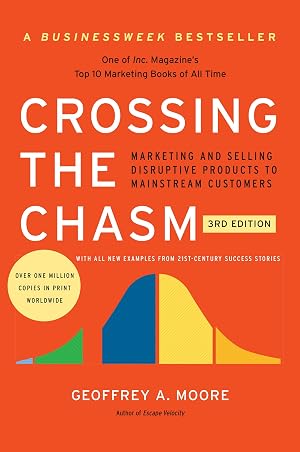
Crossing the Chasm
Advanced Strategy & Psychology The technology adoption lifecycle framework that explains why most innovative products fail. Moore identifies the chasm between early adopters and the early majority — and provides a specific strategy for crossing it using the bowling pin approach.
Core Frameworks
01
The chasm in the adoption life cycle: Between visionaries (early adopters) and pragmatists (early majority) lies a gap most products fall into.
02
The D-Day analogy: win a beachhead: Cross the chasm by concentrating everything on one niche, dominating it, and using it as a base for adjacent segments.
03
The whole product: Pragmatists buy the whole product: generic, expected, augmented and potential layers around the core.
The chasm is the gap between the early market's enthusiasm and the mainstream market's pragmatism. Failing to cross it is the most common cause of technology company failure.

Competing Against Luck
Advanced Strategy & Psychology The Jobs-to-be-Done theory — the most powerful framework for understanding why customers buy. Christensen argues that customers don't buy products; they hire them to do a job. Understanding the job is the foundation of all great product and content strategy.
Core Frameworks
01
Jobs to be done: Customers "hire" products to make progress in a particular circumstance; jobs have functional, social and emotional dimensions.
02
Forces that shape choice: The push of the situation and the pull of the new solution compete against the habit of the present and anxiety about the new.
03
Circumstance over customer attributes: Demographics and product attributes don't explain why people buy; the circumstance does.
Customers don't buy products — they hire them to make progress in their lives. Understand the job, and you understand the customer better than any demographic study can.

The Minimalist Entrepreneur
Modern Creator + Internet Thinking The anti-startup manifesto for building a profitable, sustainable, community-first business. Lavingia argues that the best businesses start with a community, not a product — and that profitability from day one is a feature, not a limitation.
Core Frameworks
01
The minimalist entrepreneur's path: Community first, build as little as possible, sell to your first 100 customers, market by being yourself, grow mindfully, build the house you want to live in.
02
Manual → processised → productised: Do it by hand first, turn it into a repeatable process, then build software.
03
Your first 100 customers: Sell first to people you know, then to your communities, and only then to strangers.
You don't learn, then start. You start, then learn. The community-first approach makes this safe by ensuring you build for real people with real problems.

Company of One
Modern Creator + Internet Thinking The radical argument against growth as a business goal. Jarvis contends that staying small, intentional, and independent is a viable and superior alternative to scaling — and that the best businesses ask why grow rather than how to grow.
Core Frameworks
01
Question growth: Growth is not automatically good; decide what "enough" is and grow only if it makes the business better.
02
Traits of a company of one: Resilience, autonomy, speed and simplicity.
03
Start small, stay small: Start with the smallest viable version, keep costs low, and grow only when it improves the business.
A company of one questions growth and considers it a choice, not an obligation. The question is not how do we grow but why should we grow and what would we trade for it.

$100M Offers
Modern Creator + Internet Thinking The most practical offer-design framework for digital products and services. Hormozi demonstrates how to construct an offer so compelling that prospects feel stupid saying no — by stacking value, eliminating risk, and addressing every objection before it's raised.
Core Frameworks
01
The Value Equation: Value = (Dream Outcome × Perceived Likelihood of Achievement) ÷ (Time Delay × Effort & Sacrifice).
02
Building a Grand Slam Offer: Dream outcome → list every problem → turn problems into solutions → choose delivery vehicles → trim & stack.
03
Enhancing the offer: Scarcity, urgency, bonuses, guarantees and naming increase demand for the same core offer.
Make your offer so good that people feel stupid saying no. Price is only an objection in the absence of value. Create enough value and price becomes irrelevant.

$100M Leads
Modern Creator + Internet Thinking The complete lead generation system for scaling a business. Hormozi maps every major acquisition channel — content, cold outreach, paid ads, referrals — with specific frameworks for each, including a dedicated chapter on content marketing.
Core Frameworks
01
The Core Four: Four ways to let people know about your stuff: warm outreach, free content, cold outreach, paid ads.
02
Lead magnets: A complete solution to a narrow problem that leads to your core offer: reveal a problem, give a sample, or solve one step.
03
Hook, retain, reward: Every piece of content: hook attention, retain it, reward it.
Leads are the lifeblood of any business. A business that has too many leads has the best kind of problem. A business that has too few has only one problem — that one.

The Cold Start Problem
Modern Creator + Internet Thinking The most rigorous analysis of how network effects actually work — and how to start building them from zero. Chen's framework for solving the cold start problem applies directly to community building, creator networks, and platform thinking.
Core Frameworks
01
The five stages of network effects: The cold start problem, tipping point, escape velocity, hitting the ceiling, the moat.
02
The atomic network: The smallest network that is stable and can grow on its own — launch there first.
03
The hard side of the network: Most networks have a minority of users who create most of the value — attract and keep them first.
Every network starts cold. The cold start problem is not a bug — it is the feature that makes networks defensible once solved. Solve it deliberately, not accidentally.

How Brands Grow Part 2
Marketing & Growth Strategy The empirical sequel to How Brands Grow, with additional evidence from new markets and categories. Extends Sharp's laws with new findings on distinctive assets, category entry points, and the limits of loyalty programs.
Core Frameworks
01
Category entry points: The cues buyers use when entering a category: why, when, where, with whom, with what, how they feel.
02
The distinctive asset grid: Assess assets by fame (how many link it to you) and uniqueness (how few link it to rivals).
03
Reach light buyers: Most buyers of a brand buy it rarely; growth requires reaching them broadly and continuously.
Brands do not grow through loyalty programs or emotional bonding — they grow by being mentally available to more buyers at the moment they want to buy.

TikTok Boom
Digital, Platforms & Creator Economy The inside story of TikTok's rise and the creation of the most powerful recommendation algorithm in social media history. Essential reading for understanding the For You Page mechanic now reshaping all social platforms.
Core Frameworks
01
Interest graph vs. social graph: TikTok shows you what you engage with, not just who you follow.
02
How the For You page learns: Each video is a test; viewing behaviour tells the system what to show next.
03
From ByteDance to a global battle: A Chinese company built a global app — and became a geopolitical issue.
TikTok proved that the social graph is not the internet's natural organizing principle — interest is. The most useful content you make travels further than follower counts can predict.

Marketing Management
Marketing & Growth Strategy The canonical marketing textbook that defines the discipline. Kotler's 4Ps and market segmentation frameworks remain the foundational vocabulary of modern marketing — essential context for every advanced marketing strategy.
Core Frameworks
01
Segmentation, targeting, positioning (STP): Divide the market, choose who to serve, and define how you want to be perceived.
02
The marketing mix (4Ps): Product, price, place, promotion — the tools to deliver the positioning.
03
Customer-perceived value: Total customer benefit minus total customer cost.
Marketing is not the art of selling what you make. It is the art of knowing what to make. Customer understanding comes before product decisions — always.

Find Your Red Thread
Branding & Positioning A framework for finding the core idea that connects everything you do — your Red Thread — and using it as the invisible spine of every message, presentation, and piece of content you create. The Red Thread is your brand's argument.
Core Frameworks
01
The Red Thread: Goal, problem, truth, change, actions — the five elements of an idea people act on.
02
Truth and change: the heart of the idea: The core of an idea is a truth the audience accepts and the change it implies.
03
People convince themselves: You can't push an idea into someone's head; you can lay out the path so they reach it.
The Red Thread is the argument your audience can't refute because it's too true. Find it, and all your content becomes obvious. Lose it, and everything becomes random.

Hello, My Name Is Awesome
Branding & Positioning The definitive guide to creating brand names that people actually remember, pronounce, and love. Watkins' SMILE and SCRATCH frameworks give anyone a systematic approach to naming — one of the most underinvested brand decisions most businesses make.
Core Frameworks
01
SMILE: Five qualities of a great name: Suggestive, Meaningful, Imagery, Legs, Emotional.
02
SCRATCH: Seven deadly sins of names: Spelling-challenged, Copycat, Restrictive, Annoying, Tame, Curse of knowledge, Hard to pronounce.
03
The name is your first marketing: An evocative name does marketing work; a descriptive name makes you explain yourself forever.
A great name is a head start. A bad name is a permanent tax. Most businesses spend their entire marketing budget correcting for a name that should have taken two weeks to fix.

Designing Brand Identity
Branding & Positioning The definitive practical handbook for building brand identity systems. Wheeler covers the full process from research and strategy through visual identity design and implementation — the reference book every brand designer keeps on their desk.
Core Frameworks
01
The brand identity process: Five phases: conducting research, clarifying strategy, designing identity, creating touchpoints, managing assets.
02
Brand ideals: Vision, meaning, authenticity, differentiation, durability, coherence, flexibility, commitment, value.
03
Sequence of cognition: The brain reads shape first, then colour, then form (words and content).
A brand identity is not a logo — it is a system. Systems have rules, components, and behaviors. Without the system, the logo is just a drawing.

Branding in Five and a Half Steps
Branding & Positioning A beautifully designed, highly practical guide to the complete branding process. Johnson's five-and-a-half-step model covers investigation, narrative, design, implementation, and engagement — with the half step being the ever-present feedback loop.
Core Frameworks
01
The five and a half steps: Investigation, strategy, narrative, the half step, design, implementation.
02
Investigation before creation: Find out why change is needed before deciding what to change.
03
The half step: Story and design go back and forth until each strengthens the other.
Branding is not a project with a start and end date. It is a continuous process of investigation, expression, and refinement. The half step never ends.

The Brand Flip
Branding & Positioning Neumeier's third brand book argues that the power in the brand relationship has permanently flipped from company to customer. In the age of social media, customers now co-create brand meaning — and companies must design for this new reality.
Core Frameworks
01
The power flip: The power has moved from the company to the customer — customers now build the brand.
02
Customers buy identity: People don't buy products; they buy the person they want to become.
03
From market to tribe: Build a brand around a shared purpose that people want to belong to.
The old model: company creates brand, pushes it to market. The new model: company proposes brand, community decides if it's worth believing in.

The Power of Branding
Branding & Positioning The father of positioning theory applies the same rigorous mental-real-estate thinking to the modern branding challenge. Ries argues that brand power comes from focus and sacrifice — not from expansion and line extension.
Core Frameworks
01
The laws of expansion and contraction: A brand's power is inversely proportional to its scope; it becomes stronger when you narrow its focus.
02
The law of the word: A brand should strive to own a word in the mind of the prospect.
03
Publicity builds, advertising maintains: A brand is born with publicity; once born, it needs advertising to stay healthy.
A brand is a word in the mind. The power of that word is directly proportional to how narrowly focused the brand is. Broaden the focus, weaken the brand.

Content Design
Content Creation & Marketing The definitive guide to designing content for the web from the creator of the GOV.UK content design methodology. Richards argues that content design means giving people the right information in the right format at the right time — not producing content for its own sake.
Core Frameworks
01
Start with the user need: As a [user], I need to [task], so that [goal] — written before any content.
02
Use the words your audience uses: Find the language people search with, and use it instead of your own jargon.
03
How people read: People scan, read the first words of each line, and want the answer fast.
Content design is not about making things look nice. It is about making things work — for the people who need to use them, in the moment they need them.

Business Storytelling for Dummies
Storytelling & Persuasion A comprehensive, accessible guide to using storytelling in professional and business contexts. Dietz and Silverman provide practical frameworks for leaders, marketers, and creators to find, craft, and deliver stories that drive business results.
Core Frameworks
01
CCARLS: Context, challenge, action, result, lesson, suggested actions.
02
Present-Future: Current reality, call for change, what could be vs. what is, call to action, proof of a happy ending.
03
Speak to the Why: State a problem, then keep asking why it matters until you reach the ultimate payoff.
Every organization is sitting on a goldmine of stories — unrecognized, uncaptured, untold. The leader who finds and tells them gains an invisible strategic advantage.

The Storytelling Edge
Storytelling & Persuasion A science-backed guide to why storytelling works in content marketing — and how to apply narrative psychology to every piece of content your brand creates. Snow and Lazauskas bridge neuroscience, journalism, and content strategy into one practical playbook.
Core Frameworks
01
The four elements of a great story: Relatability, novelty, tension, fluency.
02
Why stories work on the brain: Stories hold attention, build empathy and bring the listener's brain in sync with the teller's.
03
Brands as storytellers: Build relationships by telling stories your audience wants, consistently, instead of interrupting with ads.
Storytelling is not a soft skill or a nice-to-have — it is the most scientifically validated method of changing minds, building trust, and driving behavior that exists.

The Art of Strategy
Advanced Strategy & Psychology Game theory made practical. Dixit and Nalebuff demonstrate how strategic thinking — anticipating what others will do and acting accordingly — applies to business decisions, negotiations, content strategy, and competitive positioning.
Core Frameworks
01
Look forward, reason backward: In sequential games, anticipate where each choice leads and work back to the best first move.
02
The prisoners' dilemma: Each player's best individual choice leads to an outcome worse for both.
03
Credible commitment: A threat or promise only works if others believe you'll carry it out — so make it costly to back down.
Strategic thinking is about looking forward and reasoning backward. The winner is not always the strongest — it is the one who best anticipates what others will do.

The Innovator's Dilemma
Advanced Strategy & Psychology The most influential business book of the last 30 years. Christensen explains why great, well-managed companies consistently fail when confronted with disruptive innovation — and what the pattern reveals about every industry's future, including the creator economy.
Core Frameworks
01
Sustaining vs. disruptive innovation: Sustaining innovations improve products for existing customers; disruptive ones start worse but cheaper and simpler, for new or low-end customers.
02
How disruption unfolds: Entrants start at the low end, improve faster than customers' needs grow, and eventually serve the mainstream.
03
Principles of disruptive technology: Five principles that explain why good companies fail and how managers can respond.
The companies most likely to be disrupted are not bad companies — they are very good companies doing exactly what good management theory says they should do.

The 4-Hour Workweek
Productivity & Performance A manifesto for escaping the 9-to-5 grind by automating income, outsourcing everything, and designing a life of maximum freedom with minimum effort. Ferriss introduces the DEAL framework — Definition, Elimination, Automation, Liberation — as a blueprint for the 'New Rich.'
Core Frameworks
01
DEAL: Definition, Elimination, Automation, Liberation.
02
Pareto and Parkinson: Do only the 20% that produces 80% of results, and shorten deadlines so work doesn't expand to fill time.
03
Define your nightmare: Write down the worst case, how you'd recover, the benefits of trying, and the cost of inaction.
The goal is not to work less but to do only what matters most and outsource or eliminate everything else.

O Monge e o Executivo
Leadership & Human Performance A parable about servant leadership told through a weekend retreat at a monastery. Hunter redefines leadership as the act of identifying and meeting the genuine needs — not the wants — of those in your care, building authority through character rather than power.
Core Frameworks
01
The servant leadership model: Will → love → service and sacrifice → authority → leadership.
02
Needs vs. wants: A servant leader meets people's legitimate needs, not all their wants.
03
Love as behaviour: Patience, kindness, humility, respect, selflessness, forgiveness, honesty, commitment.
True leadership is not about power over others but about serving their needs so they can do their best work.

Emotional Intelligence
Leadership & Human Performance The landmark study that proved emotional intelligence (EQ) is a stronger predictor of life and career success than IQ. Goleman maps five domains — self-awareness, self-regulation, motivation, empathy, and social skills — and demonstrates they can all be learned and improved.
Core Frameworks
01
The five domains of emotional intelligence: Knowing your emotions, managing them, motivating yourself, recognising emotions in others, handling relationships.
02
The amygdala hijack: An emotional emergency where the amygdala reacts before the thinking brain can weigh in.
03
Impulse control and delayed gratification: The ability to resist impulse in pursuit of a goal predicts later success.
IQ gets you hired. EQ gets you promoted, keeps you married, and determines how far your leadership reaches.

Outliers
Psychology & Behavioral Science A systematic dismantling of the self-made success myth. Gladwell shows that extraordinary achievement is less about innate talent and more about timing, cultural legacy, hidden advantages, and the 10,000-hour rule. Success is a product of opportunity meeting preparation.
Core Frameworks
01
Accumulative advantage: A small early edge leads to more opportunities, which widen the gap over time.
02
The 10,000-hour rule: World-class skill takes about 10,000 hours of practice — and the opportunity to get them.
03
Cultural legacy: the ladder of mitigation: Cultural habits like deference to authority shape how directly people speak — and that can be fatal.
Talent is not the point. The hidden advantages, cultural legacies, and sheer hours of practice behind every outlier are the real story.

Tools of Titans
Productivity & Performance A distillation of 200+ interviews with world-class performers — athletes, billionaires, authors, generals, and artists. Ferriss extracts the morning routines, mental frameworks, investment strategies, and tactical wisdom that appear repeatedly across the most successful people on the planet.
Core Frameworks
01
Five morning rituals: Make your bed, meditate, do a few reps of exercise, prepare tea, journal — do three of five and you've won the morning.
02
1,000 true fans: A creator needs about 1,000 true fans, each paying around $100 a year, to make a living.
03
"Hell yeah!" or no: If something isn't an exciting yes, say no.
World-class performance is not about secrets — it is about consistently applied fundamentals that most people know but few actually do.

Deep Work
Productivity & Performance A case for the lost art of focused, distraction-free work. Newport argues that the ability to concentrate without distraction on cognitively demanding tasks is becoming simultaneously rarer and more valuable. Those who cultivate this ability will thrive; those who don't will be left behind.
Core Frameworks
01
The deep work equation: High-quality work produced = time spent × intensity of focus.
02
Four philosophies of deep work: Monastic, bimodal, rhythmic and journalistic ways to fit deep work into your life.
03
The shutdown ritual: End each workday with a fixed routine that closes open loops, then stop thinking about work.
Distraction is not laziness — it is a career strategy error. Deep work is the competitive skill of the knowledge economy.

Essentialism
Productivity & Performance A disciplined approach to determining what is absolutely essential and eliminating everything else. McKeown argues that the undisciplined pursuit of more is the enemy of making the highest possible contribution — and that saying no to almost everything is the only way to say yes to what matters.
Core Frameworks
01
Explore, eliminate, execute: The essentialist process: discern the vital few, cut the trivial many, make execution effortless.
02
Essentialist vs. non-essentialist: The non-essentialist spreads energy across everything; the essentialist channels it into the few things that matter.
03
The 90 percent rule: Rate each option 0–100; anything below 90 becomes a zero.
If you don't prioritize your life, someone else will — and they will always prioritize their agenda over yours.
Atomic Habits
Productivity & Performance A practical framework for building good habits and breaking bad ones through tiny, consistent changes. Clear argues that habits are the compound interest of self-improvement — 1% better every day leads to 37x improvement in a year — and that the system of your environment matters more than your level of motivation.
Core Frameworks
01
The Four Laws of Behavior Change: Cue → craving → response → reward. Make it obvious, attractive, easy and satisfying — or invert the laws to break a habit.
02
Identity-based habits: Three layers of change — outcomes, processes, identity. Lasting habits start from who you want to become.
03
Habit stacking: "After [current habit], I will [new habit]." Link the new behaviour to one you already do.
You do not rise to the level of your goals. You fall to the level of your systems.

The Power of Habit
Psychology & Behavioral Science An investigation into the neuroscience and science of habit formation in individuals, organizations, and societies. Duhigg reveals the three-part habit loop — cue, routine, reward — and shows how identifying the 'keystone habits' that trigger cascades of other behaviors is the master lever of personal and organizational change.
Core Frameworks
01
The habit loop: Cue → routine → reward, powered by a craving for the reward.
02
The Golden Rule of Habit Change: Keep the old cue and the old reward; insert a new routine.
03
Keystone habits: Some habits start chain reactions: they create small wins, new structures and cultures that change other habits.
You can't extinguish a bad habit — you can only replace the routine while keeping the same cue and reward.

Getting Things Done
Productivity & Performance The definitive productivity system for capturing, clarifying, and organizing every commitment so nothing slips through mental cracks. Allen's insight is that the mind is for having ideas, not holding them — an external trusted system frees cognitive resources for actual creative thinking.
Core Frameworks
01
The five steps of mastering workflow: Capture, clarify, organize, reflect, engage.
02
Clarify and the two-minute rule: Is it actionable? What's the next action? If it takes less than two minutes, do it now.
03
The weekly review: Get clear, get current, get creative — once a week.
Your mind is for having ideas, not holding them. Get everything out of your head and into a trusted system.

The 7 Habits of Highly Effective People
Leadership & Human Performance A principle-centered framework for personal and interpersonal effectiveness built on character rather than technique. Covey argues that lasting success requires aligning your behavior with universal principles — integrity, fairness, human dignity — that are independent of culture or circumstance.
Core Frameworks
01
The maturity continuum: From dependence to independence (habits 1–3) to interdependence (habits 4–6), renewed by habit 7.
02
Circle of concern, circle of influence: Proactive people focus on what they can influence, and the circle grows.
03
The time management matrix: Urgent vs. important: effective people live in Quadrant II — important but not urgent.
Private victory precedes public victory. You cannot build a leadership reputation on a character deficit.

Flow
Psychology & Behavioral Science A decades-long study of optimal human experience — the state of complete absorption in a challenging activity where self-consciousness disappears and time distorts. Csikszentmihalyi identifies the conditions for Flow and argues it is the closest humans get to genuine happiness.
Core Frameworks
01
The flow channel: Flow happens when challenge and skill are both high and matched; too much challenge brings anxiety, too little brings boredom.
02
The elements of enjoyment: Eight components that people describe when they are in flow.
03
Flow and the growth of complexity: Staying in flow forces growth: as skills rise, challenges must rise too.
Happiness is not something that happens to you — it is a condition you engineer by aligning challenge with skill.

Grit
Psychology & Behavioral Science A decade of research proving that passion and perseverance — not talent — predict long-term achievement. Duckworth coins 'grit' as the combination of sustained passion for a long-term goal and the resilience to persist through failure, and provides concrete practices for developing it.
Core Frameworks
01
Effort counts twice: Talent × effort = skill. Skill × effort = achievement.
02
The goal hierarchy: Grit means a top-level goal that organizes many mid- and low-level goals over a long time.
03
Growing grit from the inside out: Interest, practice, purpose, hope — four psychological assets that tend to develop in this order.
Talent counts once. Effort counts twice. Grit is what converts effort into skill and skill into achievement.

Mindset
Psychology & Behavioral Science The landmark study of how beliefs about the nature of talent and intelligence determine whether people fulfill their potential. Dweck distinguishes the fixed mindset (abilities are innate and unchangeable) from the growth mindset (abilities can be developed through effort), and shows how the distinction shapes every life domain.
Core Frameworks
01
Fixed vs. growth mindset: Believing abilities are fixed vs. believing they can be developed shapes how people learn and react to failure.
02
Praise the process, not the person: Praising intelligence breeds a fixed mindset; praising effort, strategies and progress breeds a growth mindset.
03
How each mindset responds: Challenges, obstacles, effort, criticism and others' success — each mindset reacts in predictable ways.
The most basic beliefs you hold about yourself determine your development. Mindset is not a personality trait — it is a choice that can be changed.

Blink
Psychology & Behavioral Science An investigation into the power and peril of rapid cognition — the judgments your unconscious mind makes in the blink of an eye. Gladwell explores when to trust thin-slicing (snap expert judgment) and when unconscious bias corrupts it, building a framework for when to go with your gut and when to override it.
Core Frameworks
01
Thin-slicing: The unconscious ability to find patterns from very narrow slices of experience.
02
What shapes our snap judgements: Priming, experience, hidden associations and stress all influence the adaptive unconscious.
03
The Warren Harding error: Snap judgements go wrong when appearance triggers associations unrelated to real ability.
Experts are not better at gathering information — they are better at editing it down to only what matters in the first two seconds.

The Tipping Point
Marketing & Growth Strategy An analysis of how small actions can trigger enormous social changes — the moment when an idea, trend, or behavior crosses the threshold and spreads like an epidemic. Gladwell identifies three universal agents of social epidemics: the few special people who spread them, the stickiness of the message, and the power of context.
Core Frameworks
01
The Law of the Few: Social epidemics are driven by a handful of exceptional people: Connectors, Mavens and Salesmen.
02
The Stickiness Factor: Small changes in how a message is presented can make it memorable enough to change behaviour.
03
The Power of Context: Behaviour is sensitive to the environment: Broken Windows and the Rule of 150.
Epidemics tip because of the extraordinary efforts of a very few exceptional people — not because of mass behavior change.

Think Again
Psychology & Behavioral Science A case for the lost art of rethinking and intellectual humility. Grant argues that the ability to question your own beliefs, update your opinions based on new evidence, and stay curious about being wrong is the defining cognitive advantage in a rapidly changing world.
Core Frameworks
01
Preacher, prosecutor, politician — or scientist: Three mindsets that keep us from rethinking, and the scientist mode that helps us update.
02
The rethinking cycle: Humility → doubt → curiosity → discovery, as opposed to the overconfidence cycle.
03
Motivational interviewing: Help others rethink through open questions, reflective listening and affirming their ability to change.
Intelligence is traditionally about thinking and learning. But in a fast-changing world, thinking again might be the most important skill of all.

Give and Take
Leadership & Human Performance A counterintuitive discovery that givers — people who contribute to others without expecting anything in return — end up at both the bottom and the top of success metrics, while matchers and takers occupy the middle. Strategic giving, not selfish taking, is the long-term winning strategy.
Core Frameworks
01
Givers, matchers and takers: Givers are both at the bottom and at the top of the success ladder; matchers and takers end up in the middle.
02
Otherish vs. selfless giving: Successful givers are high in concern for others and for themselves.
03
Giving in networks: Five-minute favours, reconnecting dormant ties and making introductions.
The most successful people are givers — but they give in ways that protect their own time and energy while still creating enormous value for others.

How to Win Friends and Influence People
Storytelling & Persuasion The original and still definitive manual for human relations. Carnegie distills decades of observation into timeless principles for making people feel valued, winning people to your way of thinking, and becoming a more effective leader — all without manipulation, coercion, or conflict.
Core Frameworks
01
Fundamental techniques in handling people: Don't criticize, condemn or complain; give honest, sincere appreciation; arouse in the other person an eager want.
02
Six ways to make people like you: Be interested, smile, remember names, listen, talk about their interests, make them feel important.
03
Win people to your way of thinking: Twelve principles, from "avoid arguments" to "throw down a challenge".
You can make more friends in two months by becoming interested in other people than in two years by trying to get other people interested in you.

Never Split the Difference
Storytelling & Persuasion A former FBI hostage negotiator reveals the counter-rational tactics that work when the stakes are life and death — and shows how the same principles apply to every negotiation, salary conversation, and business deal. The insight: humans are not rational actors, and negotiation that treats them as such fails.
Core Frameworks
01
Tactical empathy: Mirroring, labeling, the accusation audit and the late-night FM DJ voice: understand and voice the other side's feelings.
02
Calibrated questions: Open "how" and "what" questions that make the other side solve your problem — like "How am I supposed to do that?"
03
The Ackerman model: A bargaining plan: target price, offer 65%, then 85%, 95%, 100% — with precise numbers and a final non-monetary item.
Negotiation is not a battle of logic — it is a process of making the other side feel heard enough to hear you.

Dare to Lead
Leadership & Human Performance A research-based argument that the future of leadership is courage. Brown identifies four skill sets of brave leadership: rumbling with vulnerability, living your values, braving trust, and learning to rise. She dismantles the myth that armor and invulnerability are strength.
Core Frameworks
01
The four skill sets of courage: Rumbling with vulnerability, living into our values, braving trust, learning to rise.
02
BRAVING trust: Boundaries, Reliability, Accountability, Vault, Integrity, Non-judgment, Generosity.
03
Clear is kind: Clear is kind. Unclear is unkind.
Vulnerability is not weakness — it is the most accurate measure of courage. Leaders who can't bear vulnerability can't lead people through change.

Leaders Eat Last
Leadership & Human Performance An investigation into why some teams thrive and others don't, using biology as the lens. Sinek argues that great leaders create a 'Circle of Safety' where every member feels protected from external threats, freeing cognitive and emotional resources for innovation, collaboration, and performance.
Core Frameworks
01
The Circle of Safety: Leaders create a space where people feel safe from internal threats, so they can face external ones together.
02
The four leadership chemicals: Endorphins and dopamine (selfish), serotonin and oxytocin (selfless).
03
The abstraction problem: The more abstract people become — numbers on a spreadsheet — the less we feel responsible for them.
The true price of leadership is putting others first. The true reward is the trust and loyalty of those who feel safe because you do.

The Five Dysfunctions of a Team
Leadership & Human Performance A leadership fable that diagnoses why teams fail through five interrelated dysfunctions: absence of trust, fear of conflict, lack of commitment, avoidance of accountability, and inattention to results. Each dysfunction builds on the one below it, making trust the foundation everything else rests on.
Core Frameworks
01
The five dysfunctions: Absence of trust → fear of conflict → lack of commitment → avoidance of accountability → inattention to results.
02
Vulnerability-based trust: Trust on a team means being able to admit weaknesses and mistakes, not just predicting how others behave.
03
The conflict continuum: Between artificial harmony and mean-spirited attacks lies the ideal point of productive conflict.
Not finance, not strategy, not technology — it is teamwork that remains the ultimate competitive advantage, because it is so powerful and so rare.

Drive
Leadership & Human Performance A challenge to the conventional carrot-and-stick theory of motivation. Pink draws on decades of behavioral science to show that extrinsic rewards (money, bonuses, punishments) destroy intrinsic motivation for creative, cognitive work. The new operating system for human motivation is Autonomy, Mastery, and Purpose.
Core Frameworks
01
Motivation 1.0, 2.0, 3.0: From survival, to carrots and sticks, to intrinsic motivation — the operating systems of human motivation.
02
Autonomy, mastery, purpose: The three elements of Motivation 3.0.
03
"If-then" vs. "now-that" rewards: Contingent rewards can harm creative work; unexpected recognition after the fact does less damage.
Carrots and sticks worked in the 20th century for routine tasks. For 21st century creative work, they are often counterproductive — and three intrinsic motivators replace them.

The Hard Thing About Hard Things
Modern Creator + Internet Thinking An unfiltered account of the psychological and operational reality of running a startup in crisis. Horowitz rejects the sanitized success-story genre and writes about making impossible decisions, laying off people, managing your own psychology, and surviving 'The Struggle' — the mental state every founder eventually enters.
Core Frameworks
01
Peacetime CEO, wartime CEO: Different situations demand different leadership: expansion in peace, survival in war.
02
People, products, profits — in that order: Take care of the people first; the products and the profits follow.
03
No silver bullets, only lead bullets: When the product is losing, there's no clever trick — you have to make the product better, the hard way.
There are no silver bullets for the hardest decisions in business — only lead bullets, and the willingness to keep firing when everything seems hopeless.

Good to Great
Advanced Strategy & Psychology A rigorous 5-year study of 11 companies that made the leap from good to great performance and sustained it for 15+ years. Collins identifies the universal patterns: Level 5 Leadership, First Who Then What, Confronting Brutal Facts, the Hedgehog Concept, a Culture of Discipline, and Technology Accelerators.
Core Frameworks
01
The Hedgehog Concept: The intersection of three circles: what you're deeply passionate about, what you can be best in the world at, what drives your economic engine.
02
The flywheel: Greatness comes from consistent pushes in one direction that build momentum, not from a single dramatic action.
03
The Stockdale Paradox: Keep unwavering faith that you will prevail and confront the most brutal facts of your current reality.
Good is the enemy of great. Most companies settle for good because the disciplined process of becoming great is more demanding than most leaders are willing to accept.
The E-Myth Revisited
Modern Creator + Internet Thinking The book that explains why most small businesses fail and what to do about it. Gerber's central insight is the Entrepreneurial Myth: the belief that being good at a technical skill qualifies you to run a business. Most businesses fail because the owner can't escape working IN the business to work ON it.
Core Frameworks
01
Entrepreneur, Manager, Technician: Three personalities in every business owner — and most small businesses are run by the technician.
02
Work on your business, not in it: Build the business as a system — a franchise prototype — that can run without you.
03
The business development process: Innovation → quantification → orchestration, repeated.
Your business is not your job — it is a product. Design it so it works without you, or you haven't built a business; you've created a self-employment trap.

Rich Dad Poor Dad
Modern Creator + Internet Thinking A parable contrasting two financial philosophies — the 'poor dad' who pursued credentials and a salary, and the 'rich dad' who acquired assets and built businesses. Kiyosaki argues that financial literacy is never taught in schools and that the rich-poor gap is primarily a gap in financial thinking, not effort.
Core Frameworks
01
Assets vs. liabilities: An asset puts money in your pocket; a liability takes money out.
02
Cash flow patterns: The poor spend everything; the middle class buy liabilities; the rich buy assets that produce income.
03
Pay yourself first: Set aside money for assets before paying bills and expenses.
The rich don't work for money — they have money work for them. The asset column is everything.

Think and Grow Rich
Advanced Strategy & Psychology A study of the common mental and psychological characteristics shared by hundreds of the most successful people of the early 20th century. Hill codifies 13 principles of achievement — led by Definite Chief Aim, Burning Desire, and specialized knowledge — into a philosophy of personal achievement.
Core Frameworks
01
The thirteen steps: Desire, faith, autosuggestion, specialised knowledge, imagination, organised planning, decision, persistence, the master mind, transmutation, the subconscious mind, the brain, the sixth sense.
02
Six steps to turn desire into riches: Fix the amount, decide what you'll give, set a date, make a plan and begin, write it down, read it twice daily.
03
The master mind: The coordination of knowledge and effort, in a spirit of harmony, between two or more people working toward a definite purpose.
Whatever the mind can conceive and believe, it can achieve. The starting point of all achievement is desire — not a hope or a wish, but a burning, obsessive desire.
The Power of Now
Leadership & Human Performance A spiritual guide to escaping the tyranny of compulsive thinking and the psychological suffering created by constant mental time travel — obsessing over the past or future. Tolle argues that the present moment is all that exists and that accessing it fully is the source of peace, creativity, and authentic action.
Core Frameworks
01
Watching the thinker: You are not your mind: observe your thoughts and a gap of presence opens.
02
The pain-body: Accumulated old emotional pain that becomes active, feeds on negativity, and takes over — until presence dissolves it.
03
Three options: In any situation that makes you unhappy: remove yourself, change it, or accept it totally.
The present moment is the only time where life can be lived, decisions can be made, and anything can be done. Everything else is mental noise.